

 新聞中心
新聞中心
 服務(wù)熱線電話
400-6188-756
 常見問(wèn)題
激光清洗和超聲波清洗有什么不同?
來(lái)源:http://m.mingyu123.cn/ 時(shí)間: 2026-08-07 瀏覽次數(shù): 0
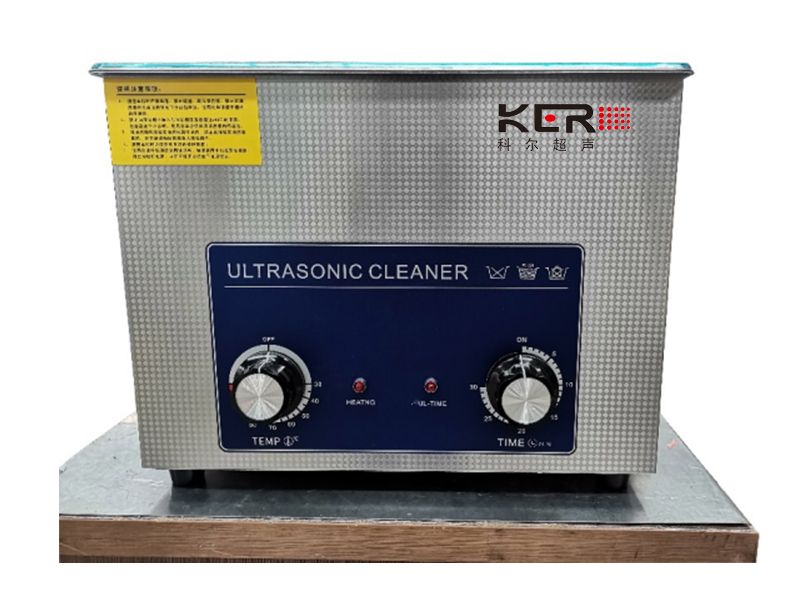
超聲波清洗器利用超聲波發(fā)生器所發(fā)出的交頻訊號(hào),通過(guò)換能器轉(zhuǎn)換成了交頻機(jī)械振蕩而傳播到介質(zhì)——清洗液中,超聲波在清洗液中以疏密相間的形式向被洗物件輻射。產(chǎn)生“空化”現(xiàn)象,即在清洗液中“氣泡”形式,產(chǎn)生破裂現(xiàn)象。當(dāng)“空化”在達(dá)到被洗物體表面破裂的 ,產(chǎn)生優(yōu)于過(guò)1000個(gè)大氣壓力的沖擊力,致使物體的面、孔、隙中的污垢被分散、破裂及剝落,使物體達(dá)到凈化清潔。
The ultrasonic cleaner uses the cross frequency signal emitted by the ultrasonic generator, which is converted into cross frequency mechanical oscillation by the transducer and propagated to the medium - cleaning solution. The ultrasonic waves radiate to the object to be washed in a sparse and dense manner in the cleaning solution. The phenomenon of "cavitation" occurs, which refers to the rupture of bubbles in the cleaning solution. When cavitation reaches the surface of the object being washed and ruptures, it generates an impact force far exceeding 1000 atmospheric pressures, causing the dirt in the surface, holes, and gaps of the object to be dispersed, ruptured, and peeled off, achieving purification and cleanliness of the object.
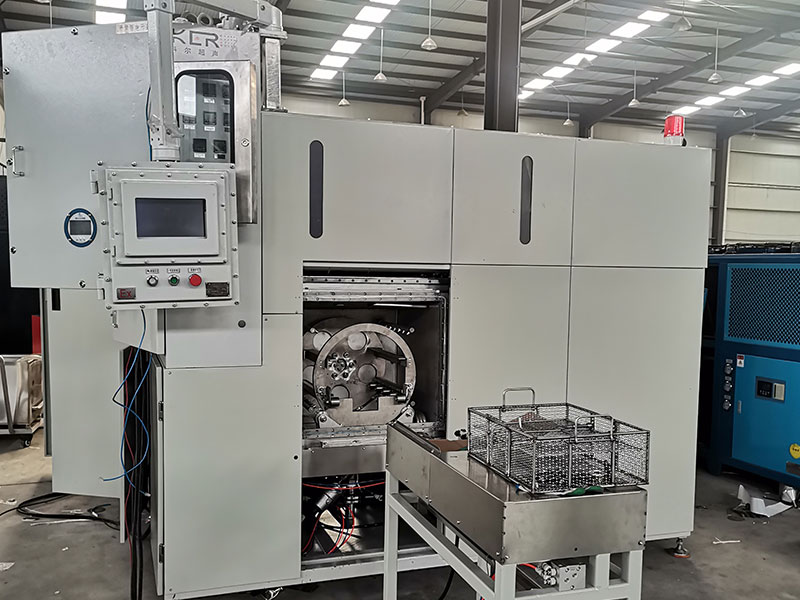
激光清洗技術(shù)是指利用高能激光束照射工件表面,使表面的污物、銹斑或涂層發(fā)生 蒸發(fā)或剝離,高速 地 清潔對(duì)象表面附著物或表面涂層,從而達(dá)到潔凈的工藝過(guò)程。它是基于激光與物質(zhì)相互作用效應(yīng)的一項(xiàng)新技術(shù),與傳統(tǒng)的機(jī)械清洗法、化學(xué)腐蝕清洗、液體固體沖擊清洗、高頻超聲清洗等傳統(tǒng)清洗方法相比,有明顯的優(yōu)點(diǎn)。它快捷、成本低,對(duì)基片產(chǎn)生的熱負(fù)荷和機(jī)械負(fù)荷小,清洗為非 ;廢物可回收,無(wú)環(huán)境污染物 可靠,不損害操作人員健康證可以 各種不同厚度、不同成份的涂層次清潔過(guò)程易于實(shí)現(xiàn)自動(dòng)化控制,實(shí)現(xiàn)遠(yuǎn)距離遙控清洗等。
Laser cleaning technology refers to the process of using high-energy laser beams to irradiate the surface of a workpiece, causing the evaporation or peeling of dirt, rust, or coatings on the surface, and rapidly cleaning the surface attachments or coatings of the object, thereby achieving a clean process. It is a new technology based on the interaction effect between laser and matter, which has significant advantages compared to traditional cleaning methods such as mechanical cleaning, chemical corrosion cleaning, liquid solid impact cleaning, and high-frequency ultrasonic cleaning. It is fast, low-cost, and has low thermal and mechanical loads on the substrate, making cleaning non essential; Waste can be recycled, there are no environmental pollutants, it is reliable, and it does not damage the health certificate of operators. The cleaning process can be easily automated with different thicknesses and compositions of coating layers, and remote control cleaning can be achieved.
激光清洗和超聲波清洗的區(qū)別在于激光清洗操作很方便,一般手持清洗即可,不需要明顯介質(zhì)直接可以對(duì)物體表面進(jìn)行清洗,對(duì)于大面積清洗和精密零部件清洗效果都很好,工作溫度在-5℃~50℃皆可而超聲波需要添加清洗劑,超聲波的功率密度越高,空化效果越強(qiáng),速度越快,清洗效果越好,但對(duì)于精密的表面光潔度甚高的物件,采用長(zhǎng)時(shí)間的高功率密度清洗會(huì)對(duì)物件表面產(chǎn)生空化、腐蝕,采用50°C~70°C的工作溫度。
The difference between laser cleaning and ultrasonic cleaning is that laser cleaning is very convenient to operate. Generally, handheld cleaning is sufficient, and no medium is needed to directly clean the surface of the object. It has good cleaning effects for large-area cleaning and precision component cleaning. The working temperature can be between -5 ℃~50 ℃, while ultrasonic cleaning requires the addition of cleaning agents. The higher the power density of ultrasonic cleaning, the stronger the cavitation effect, the faster the speed, and the better the cleaning effect. However, for precision objects with high surface smoothness, long-term high-power density cleaning will cause cavitation and corrosion on the surface of the object. Using a working temperature of 50 ° C~70 ° C is recommended.
激光清洗有可以與被清洗物不接觸的優(yōu)勢(shì)。超聲波清洗的方法是近距離清洗,對(duì)清洗物體表面 械作用力,容易 物體表面。而激光清洗是一種非接觸加工,可方便地實(shí)現(xiàn)遠(yuǎn)距離操作。
Laser cleaning has the advantage of not coming into contact with the object being cleaned. The method of ultrasonic cleaning is close range cleaning, which applies mechanical force to the surface of the cleaned object, making it easier to clean the surface of the object. Laser cleaning is a non-contact process that can be easily operated remotely.
相關(guān)產(chǎn)品
相關(guān)文章
-
臺(tái)式超聲波清洗機(jī)的日常維護(hù)需要注意什么? 2026-09-14
-
通過(guò)式清洗機(jī):產(chǎn)線清洗的通用平臺(tái) 2026-09-12
-
高壓去毛刺清洗機(jī)以水代刀的精密處理方案 2026-09-10
-
碳?xì)淝逑礄C(jī)是環(huán)保清洗機(jī)的重要組成! 2026-09-07
-
多槽式超聲波清洗機(jī)如何實(shí)現(xiàn)批量清洗的出色與零殘留雙重保障? 2026-09-05
-
多槽式超聲波清洗機(jī)為何成為工業(yè)精密清洗流水線的標(biāo)配? 2026-09-03
-
工業(yè)清洗提質(zhì)增效!全自動(dòng)超聲波清洗機(jī)使用優(yōu)勢(shì)與保養(yǎng)指南 2026-09-01
-
真空技術(shù):讓碳?xì)洹懊撎Q骨”的魔法! 2026-08-29
-
高壓去毛刺清洗機(jī)相當(dāng)于用水刀削掉金屬毛刺 2026-08-26
-
CNC高壓清洗機(jī):給精密零件做深層級(jí)別的清洗 2026-08-24


 魯公網(wǎng)安備37011202000628號(hào)